
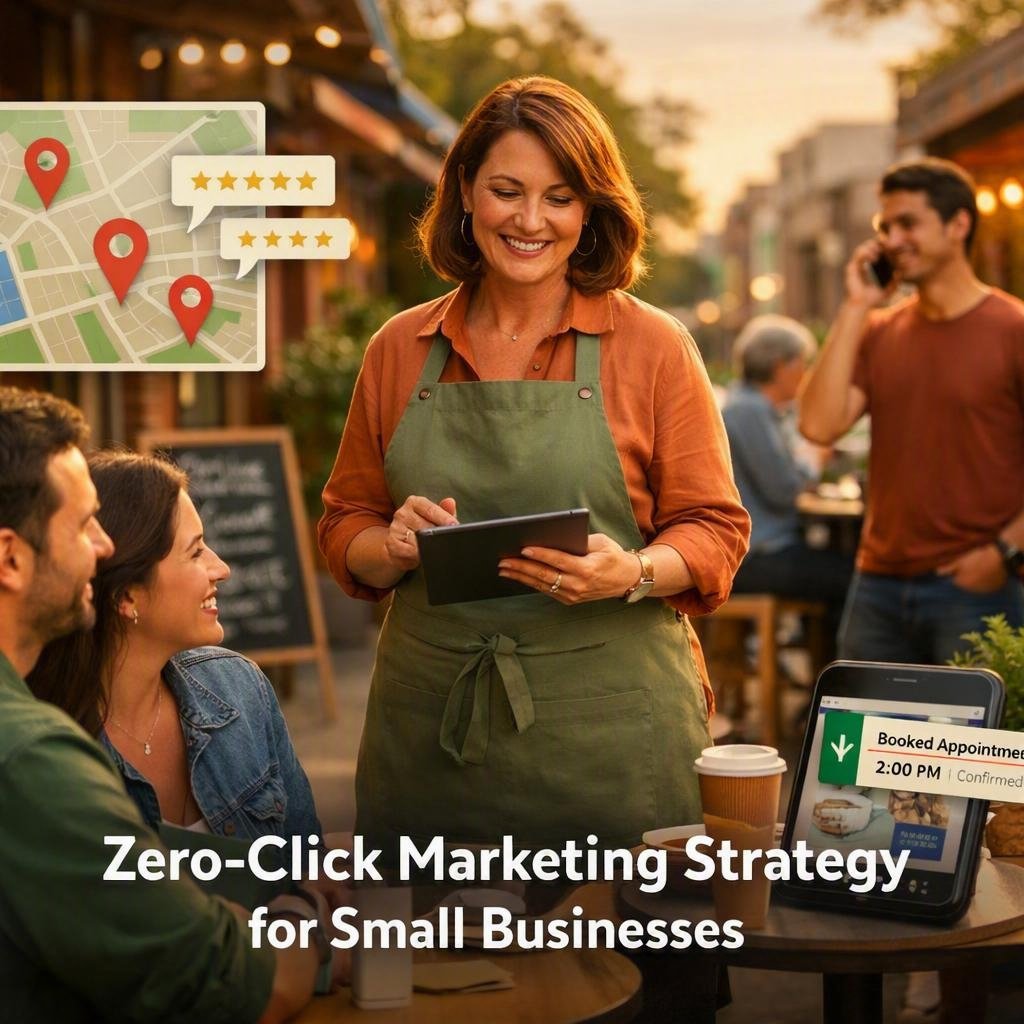
Small businesses are discovering something counterintuitive: getting found online doesn’t always require someone to click on your link. Customers are making decisions, forming opinions, and even taking action — all without ever visiting your website. This shift is reshaping how smart business owners think about visibility, brand awareness, and customer engagement.
Zero-click searches now account for a significant portion of all search activity. When someone searches for your business hours, reads your Google Knowledge Panel, or sees your social media caption in a feed, they’re interacting with your brand without a single click. For small businesses with limited budgets and tight teams, this isn’t a threat — it’s an opportunity hiding in plain sight.
Understanding how to build a digital marketing presence that works across these zero-click touchpoints can transform how your business grows. This guide walks through everything you need to know — from the mechanics of zero-click behavior to practical implementation steps tailored for small teams.
Why Zero-Click Marketing Matters for Small Businesses
Small business marketing has always been about efficiency. You need maximum impact from every dollar and every hour spent. Zero-click strategies align perfectly with that goal because they focus on delivering value at the moment of discovery — before a customer even decides to visit your site.
When your business appears in a featured snippet, a local pack, or a social preview, you’re building brand authority without paying for ad clicks. That kind of organic search traffic and visibility compounds over time, creating a foundation that supports sustainable growth.
What “Zero-Click” Really Means in Modern Customer Journeys
Zero-click doesn’t mean zero engagement. It means the engagement happens on the platform — in the SERP, in the social feed, in the chat widget — rather than on your website. Customers still learn about you, trust you, and choose you. The journey just looks different now.
Search intent has evolved. People want instant answers, and search engines and social platforms are designed to provide them. Your job is to be the source of those answers, even when the answer appears before anyone clicks through.
Understanding Zero-Click Behavior and Its Implications
How Search Engines and Social Platforms Enable Zero-Click Interactions
Google has built its entire recent evolution around answering questions directly on the Search Engine Results Page. Featured snippets, People Also Ask boxes, knowledge panels, and AI-generated overviews all serve information without requiring a click. Social platforms do the same through rich previews, auto-playing videos, and in-app shopping features.
For small businesses, this means your content strategy needs to account for where answers are displayed, not just where they’re hosted. Structured data markup and schema markup help search engines understand your content well enough to surface it in these high-visibility positions.
Voice search optimization adds another layer. When someone asks a smart speaker for the best plumber nearby, the answer comes from zero-click data — your Google My Business profile, your local SEO signals, and your structured content.
Common Zero-Click Touchpoints: SERP Features, Social Previews, and Chat Widgets
Knowing where zero-click interactions happen helps you prioritize your efforts. The most common touchpoints include:
- Featured snippets that answer question-based queries directly in search results
- Google Knowledge Panel entries showing business details, reviews, and photos
- Local packs displaying maps, hours, and contact information
- Social media captions and thumbnails viewed without clicking through
- Chat widgets that answer customer questions before they browse your site
- People Also Ask sections that expand answers inline
- Email preview text that communicates value before the email is opened
Each of these is a moment where your brand either makes an impression or gets ignored. Optimizing for SERP features and social previews means treating every touchpoint as a mini-advertisement for your business.
Benefits and Risks of Zero-Click Engagement for Small Businesses
The benefits are real. Zero-click visibility builds online visibility and brand awareness without requiring ongoing ad spend. It positions your business as an authority in your niche and keeps you present in customer minds throughout their decision-making process.
The risks are worth acknowledging too. If your entire strategy depends on website traffic metrics, zero-click success can look like failure. Click-through rate may drop even as your actual customer inquiries increase. Understanding this distinction is critical before you start measuring results.
There’s also platform dependency. When Google or a social network changes how it displays information, your zero-click presence can shift overnight. Diversifying across multiple touchpoints reduces that risk significantly.
Core Elements of a Zero-Click Marketing Strategy
Designing Content That Delivers Value Without a Click
Content designed for zero-click environments needs to be complete, concise, and immediately useful. Think about what a customer needs to know right now — not what will entice them to click through for more. Answer the question fully, then let the click be optional.
This approach actually improves your content marketing strategy overall. When you write for search intent rather than for traffic, your content becomes more relevant, more trustworthy, and more likely to earn the featured snippet positions that drive zero-click visibility.
Long-tail keywords are your best friends here. Specific, question-based queries like “how much does a roof repair cost in [city]” are exactly the kind of searches that trigger featured snippets and People Also Ask results. Keyword research focused on these phrases pays dividends across both zero-click and traditional click-through campaigns.
Optimizing for Featured Snippets, Knowledge Panels, and Local Packs
Featured snippets reward content that directly answers specific questions in a clean, structured format. Use headers, short paragraphs, and numbered or bulleted lists. Define terms clearly. Answer the question in the first sentence, then provide supporting detail.
Your Google Knowledge Panel is powered by your Google My Business profile and your overall online presence. Keep your business information consistent across every directory, review site, and social platform. Inconsistencies confuse search engines and reduce your chances of appearing in knowledge panel results.
Local packs are critical for service-area businesses. As explained in this practical guide to local SEO, optimizing your Google Business Profile with accurate categories, photos, service descriptions, and regular posts dramatically improves your local pack visibility.
Leveraging Social Media Captions, Thumbnails, and Micro-Content
Social media presence in a zero-click world means designing every post to communicate its full value in the feed. Your caption should stand alone. Your thumbnail should tell a story. Your first line should hook attention without requiring anyone to tap “more.”
This is micro-content strategy in practice. Short-form video, carousel posts, and infographic-style images all perform well because they deliver complete value within the platform. Engagement happens in the comments, in the shares, and in the brand recognition that builds over time — not just in link clicks.
Consistency across platforms matters more than frequency. A cohesive visual identity and messaging style means customers recognize your brand whether they encounter you on search, social, or email.
Aligning Messaging Across Search, Social, Email, and Chat
Zero-click touchpoints work best when they reinforce each other. A customer might see your local pack listing, then encounter your social media post, then receive your email — all before visiting your site. Each interaction should feel like part of the same conversation.
Map your messaging across every channel. Your brand voice, your core value proposition, and your key differentiators should appear consistently whether someone reads your email preview text or your Google Business Profile description. This alignment builds the kind of brand authority that converts browsers into buyers.
Practical Implementation for Different Types of Small Businesses
Local Service Businesses: Driving Calls and Visits Directly from SERPs
For plumbers, electricians, landscapers, and other local service providers, the SERP is often the final destination. Customers search, see your local pack listing with your phone number, and call — never visiting your website at all. That’s a zero-click conversion, and it’s extremely valuable.
Optimizing your Google Business Profile for service area businesses is the single highest-impact action you can take. Add service categories, upload photos, collect reviews, and post updates regularly. Enable messaging so customers can contact you directly from search results.
Schema markup for local businesses — including your address, phone number, hours, and service areas — helps search engines display your information accurately in zero-click formats.
Retail and E-Commerce: Product Discovery and Trust Building in Zero-Click Environments
Retail businesses benefit from product schema, which enables rich results showing prices, availability, and ratings directly in search. These zero-click previews build trust before a customer ever visits your store or site.
Social commerce features on platforms like Instagram and Pinterest allow customers to discover and evaluate products entirely within the app. Your product images, descriptions, and pricing need to be compelling enough to drive purchase intent at that zero-click stage.
Review management is especially important here. Star ratings appearing in SERP features and social previews influence buying decisions instantly. Actively requesting and responding to reviews is a core part of your zero-click retail strategy.
B2B and Professional Services: Authority Building Through Zero-Click Thought Leadership
Professional service firms — consultants, accountants, lawyers, agencies — build trust through demonstrated expertise. Zero-click thought leadership means your insights appear in featured snippets, People Also Ask boxes, and social feeds, positioning you as the go-to authority before a prospect ever visits your site.
Focus on question-based queries your ideal clients are searching. Answer them completely in your content. Use structured data to help search engines identify your expertise. Publish consistently on LinkedIn where previews and native content reach decision-makers without requiring a click to an external site.
For those exploring cost-effective marketing approaches, zero-click thought leadership offers exceptional return because it compounds over time without ongoing ad spend.
Budget-Friendly Tools, Templates, and Processes for Small Teams
Small teams can implement zero-click strategies without enterprise budgets. Free and low-cost tools make this accessible:
- Google Search Console for tracking impressions, SERP features, and keyword performance
- Google Business Profile dashboard for managing your local presence
- Canva for creating social thumbnails and micro-content visuals
- Schema markup generators for adding structured data without coding
- Answer the Public or similar tools for finding question-based queries
- Platform-native analytics on Instagram, Facebook, and LinkedIn
Create simple templates for your most common content types — FAQ answers, social captions, email preview text — so your team can produce zero-click-optimized content efficiently.
Measuring, Iterating, and Balancing Clicks with Zero-Click Wins
Key Metrics for Zero-Click Success: Impressions, Actions, and Assisted Conversions
Traditional traffic metrics miss most of the zero-click story. Expand your measurement framework to include impressions, phone calls from search, direction requests, profile views, and social reach. These numbers reveal the true scope of your zero-click impact.
Assisted conversions are particularly telling. A customer might see your featured snippet, then search your brand name directly, then convert. The zero-click interaction started that journey even though it doesn’t appear in last-click attribution models.
Using Analytics and Platform Insights to Refine Your Approach
Google Search Console shows which queries trigger your SERP features and how many impressions you’re earning. Google Business Profile insights reveal how customers find and interact with your listing. Social platform analytics show reach and engagement separate from link clicks.
Review this data regularly and look for patterns. Which content earns featured snippets? Which social posts generate saves and shares without link clicks? Double down on what’s working and adjust what isn’t.
Finding the Right Mix of Zero-Click and Traditional Click-Through Campaigns
Zero-click strategies don’t replace click-through campaigns — they complement them. Some customer journeys require multiple touchpoints before conversion, and your website remains essential for detailed information, lead capture, and e-commerce transactions.
The right mix depends on your business type, your customer journey, and your goals. Local service businesses may find zero-click interactions drive the majority of their leads. E-commerce businesses still need product pages. Test, measure, and adjust based on what actually drives revenue for your specific situation.
Conclusion
Recap: How Zero-Click Strategies Support Sustainable Growth
Zero-click marketing builds visibility, trust, and brand authority across the touchpoints where modern customers actually spend their attention. It works with search engine behavior rather than against it, and it creates compounding returns that grow over time without proportional increases in budget.
Prioritizing Customer Experience Over Pure Traffic Numbers
The businesses that win with zero-click strategies share one mindset: they prioritize being genuinely useful over being clicked. When you focus on answering questions, solving problems, and showing up consistently, traffic becomes a byproduct rather than the goal.
Customer engagement built through zero-click interactions is often higher quality than traffic driven by clickbait. These customers arrive already informed, already trusting, and much closer to a buying decision.
Actionable Next Steps for Small Businesses Getting Started
Start with your Google Business Profile — it’s free and delivers immediate zero-click visibility. Then audit your existing content for featured snippet opportunities. Add schema markup to your key pages. Design your next three social posts to deliver complete value in the caption alone.
Small, consistent steps compound into significant competitive advantage. The businesses investing in zero-click visibility now are building a presence that will be very difficult for competitors to displace later.
FAQ
Is zero-click marketing worth the effort for very small or solo businesses?
Absolutely. Solo businesses and micro-teams often benefit most because zero-click visibility is largely free. Optimizing your Google Business Profile, earning featured snippets, and creating strong social micro-content requires time and skill, not budget. The return on that investment is ongoing organic search traffic and brand awareness that doesn’t require continuous spending.
How can I track results from zero-click interactions if they don’t lead to site visits?
Use platform-specific tools. Google Search Console tracks impressions and SERP feature appearances. Google Business Profile insights show calls, direction requests, and profile views. Social analytics reveal reach and saves. Ask new customers how they found you — many will describe a zero-click interaction even if they don’t use that term.
Will focusing on zero-click strategies reduce my overall website traffic?
Possibly in the short term, but overall business results typically improve. Click-through rate on individual queries may decrease as you earn featured snippets, but your total impressions and brand recognition increase. More importantly, the customers who do click through are better qualified because they’ve already received useful information from your zero-click presence.